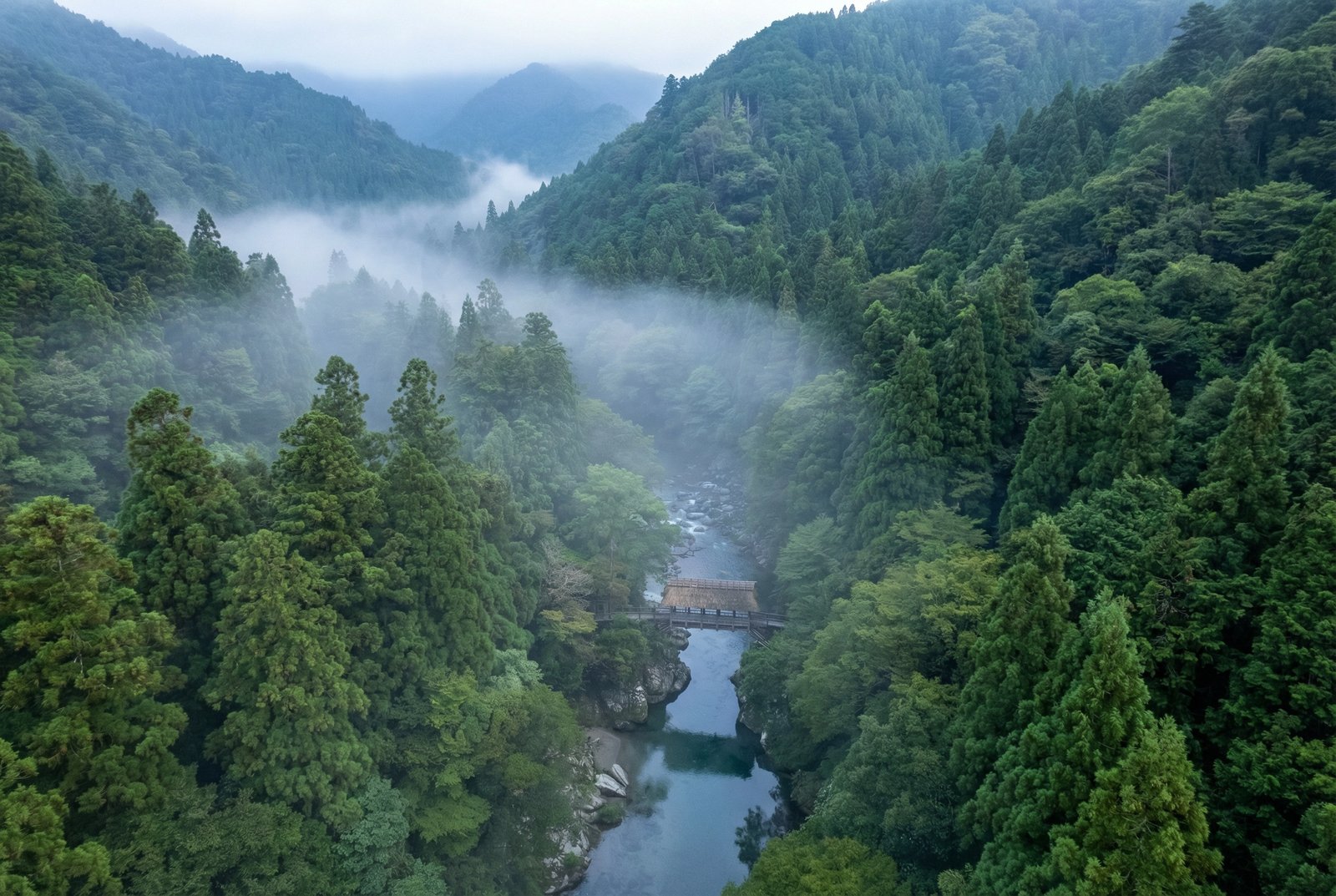
Forest valley and river in regional Japan

Responsible Travel

Great journeys first. Positive impact by design.

Towaka integrates responsible travel into the decisions that shape each journey — where it goes, when it travels, how it moves, who helps deliver it and how travellers are prepared to engage with the places they visit.

We do not assume that every journey creates a positive impact. Our responsibility is to make better decisions about how each journey is designed, sourced and delivered.

Towaka is recognised as a Travelife Partner.

Built into the journey

Responsibility begins before a journey is confirmed.

Responsible travel matters most while decisions can still change.

It becomes meaningful when it changes what is designed, selected, communicated or declined.

Responsibility should change decisions.

Responsible travel in practice

From journey design to everyday delivery.

These five areas explain how responsible travel enters Towaka's work.

Journey Design

01

Make responsible choices while the journey can still change.

Towaka considers seasonality, time of day, visitor concentration, routing, transport logic, pace, group scale and local capacity as part of journey design.

Where conditions would weaken either the place or the experience, we may change the timing, sequence, location or overall approach.

Feasibility is part of the design.

Communities & Culture

02

Communities and cultural practices are not inventory.

Towaka considers the setting, host, group scale, timing, appropriate behaviour and the meaning of what is being shared before recommending a cultural or regional experience.

We avoid interactions that disregard context, consent, dignity or the wishes of the people involved.

Context matters before participation.

Partners & Suppliers

03

Responsible delivery depends on the people behind it.

Towaka works with accommodation providers, guides, transport operators, cultural practitioners, specialists and regional partners expected to meet applicable legal, safety and professional requirements.

Where appropriate, we favour partners whose practices demonstrate professional standards, cultural integrity, local relevance and respect for the communities in which they operate.

Local ownership alone is not proof of responsible practice.

Service quality, legal compliance and reliable delivery also matter.

Traveller Preparation

04

Responsible travel also depends on what travellers understand.

Depending on the journey, preparation may include local customs, photography, dress, behaviour in culturally sensitive settings, practical destination guidance and other context relevant to the visit.

Information may be provided through the professional partner or directly to travellers according to the agreed service arrangement.

Better context can lead to better encounters.

Management & Improvement

05

Responsible travel requires an operating system, not only good intentions.

Documented practices, internal review and partner and traveller feedback help Towaka identify concerns and improve how journeys are designed, sourced and delivered.

Policies and procedures evolve as standards, operating conditions and business needs change.

Improvement is ongoing, practical and accountable.

Two sides of a good journey

Meaningful for the guest. Valuable for the place.

Responsible design should improve the journey rather than sit beside it. Better pacing, appropriate timing, stronger context and respect for local capacity can create value for both traveller and place.

The right balance depends on the journey. What works in one destination, season or group may not work in another.

Responsibility is contextual, not formulaic.

When the answer needs to change

Some journeys need a different answer.

When an element cannot be delivered responsibly, legally or appropriately for the people and place involved, Towaka may redesign it, recommend an alternative or decline it.

Redesign

Redesign

Change the timing, structure, scale, supplier, context or delivery approach where a better answer is possible.

Alternative

Alternative

Recommend a different way to achieve the purpose where appropriate.

Decline

Decline

Do not proceed when a responsible, legal or appropriate solution cannot be found.

Responsibility changes the answer.

wildlife experiences that depend on exploitation, inappropriate handling or practices that compromise animal welfare

services that do not meet applicable safety, labour or legal requirements

cultural encounters that disregard consent, dignity, appropriate context or the wishes of the host community

journey designs that place unreasonable pressure on a destination's practical or social capacity

These decisions are made case by case. Where concerns arise, we discuss them with the professional partner and, where possible, look for a better way to achieve the purpose of the journey.

Responsible design sometimes means changing the plan.

Standards & Improvement

A structured approach that continues to evolve.

Travelife Partner

Travelife supports the operating system.

View our Travelife certificate

Towaka is recognised as a Travelife Partner within the Travelife sustainability management framework for tour operators and travel agents.

Partner status reflects progress in implementing structured sustainability practices. It is not presented as proof that every journey is impact-free or that the work is complete.

We use the Travelife framework to make responsible travel part of everyday operations — from supplier considerations and documentation to internal review and future improvement.

Better destination understanding supports better journey decisions.

Towaka also draws on the wider inbound tourism knowledge developed through yamatogokoro, including practical understanding of destination management, visitor readiness, regional tourism and the relationship between tourism and local communities.

That perspective matters when deciding not only what may be attractive to visitors, but what is appropriate and workable for the place receiving them.

Better journeys require better decisions over time.

Towaka continues to review how journeys are designed, sourced and delivered as destination conditions, professional standards and partner expectations evolve.

Continuous practice, not a finished claim.

Responsible Travel

Design the journey with both guest and place in mind.

If responsible travel matters to your client, programme or organisation, bring those priorities into the brief from the beginning. We can consider them as part of the journey design rather than adding them later.