01
Question
Define what needs to be understood.
What do participants want or need to understand? Why does that question matter to them, and what should the journey help them see differently?

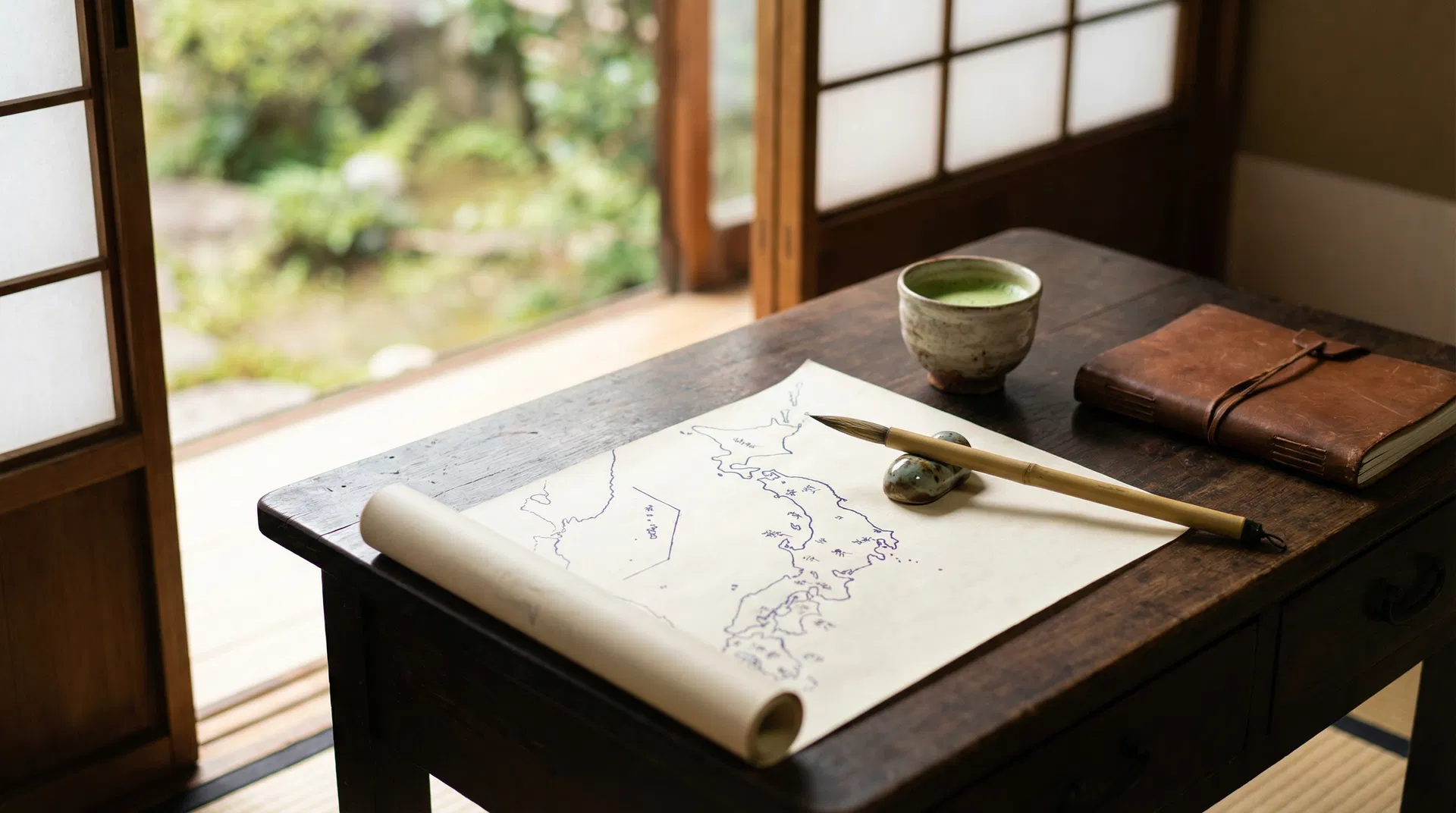
Learn
Towaka designs Learning Journeys that help professional groups understand Japan through relevant people, places, dialogue and reflection.
Each journey begins with a question — not a list of appointments.
A different starting point
A question-led journey through Japan designed for deeper understanding.
A Learning Journey may include field visits, conversations with practitioners, specialist briefings, observation and cultural encounters. But those elements are not the starting point. The starting point is what participants are trying to understand.
Towaka uses that question to shape the people, places, dialogue and reflection that follow — designing the journey as a learning sequence rather than a list of appointments.
Our Learning Framework
Every Learning Journey begins with a question. From there, Towaka designs a sequence of people, places, dialogue and reflection that helps participants build a deeper understanding of Japan.
Question → People → Places → Dialogue → Reflection
01
Define what needs to be understood.
What do participants want or need to understand? Why does that question matter to them, and what should the journey help them see differently?
02
Bring relevant perspectives.
Which practitioners, specialists, leaders, educators, makers or community voices can offer perspectives that deepen understanding of the question?
03
Put the question in context.
Where can participants observe the issue, practice or system in the environment where it actually exists?
04
Turn observation into exchange.
How can the programme create space for questions, comparison and genuine exchange rather than one-way explanation?
05
Turn experience into understanding.
What did participants notice? What challenged their assumptions? What might be relevant in their own context, and what questions remain?
We design the journey as a learning sequence, not a list of appointments.
Designed on two levels
The Learning Journey Framework shapes how participants learn. Towaka's broader Journey Design Principles shape how the journey itself works.
Learning
Question → People → Places → Dialogue → Reflection
Journey
Purpose · Context · Pace · Comfort · Feasibility
Together, they help ensure that the programme is intellectually coherent, practical on the ground and appropriate for the people taking part.
Professional learning through Japan
Towaka works with professional partners, programme organisers and institutions developing journeys for participants who want to understand a particular issue, industry, practice or place through Japan.
What can Japan help us understand?
These themes represent credible areas of focus.
They are not an unlimited capability list.
How destinations balance visitor growth, local value, capacity and the everyday life of the place.
How communities, businesses and local institutions respond to demographic, economic and social change.
How transport, mobility, commercial development and place-making interact within Japanese cities and regions.
How hospitality principles are translated into everyday decisions, operations and guest experience.
How makers, local industries and cultural practices adapt, survive and create value across generations.
A deeper foundation
Towaka builds on nearly two decades of inbound tourism knowledge, industry relationships, regional collaboration and professional education developed through yamatogokoro.
That foundation helps us identify not only where participants might go, but what questions are worth exploring and which perspectives can make those questions meaningful.
Towaka is where that knowledge becomes a journey.
Explore the question before the journey
Towaka Insights explores many of the issues that can become the basis of a Learning Journey — from destination capacity and regional development to hospitality and the changing shape of tourism in Japan.
They offer a view into how Towaka thinks before a programme is designed.
Starting Points for Exploration
The examples below are not fixed programmes or delivered case studies. They illustrate how a learning question can become the starting point for a journey.
Destination Management & Overtourism
A Learning Journey could examine how destinations think about capacity, visitor flows, local value and the relationship between tourism and everyday life.
The emphasis would be on comparing perspectives and seeing how those questions appear in practice.
Railway, Mobility & Regional Development
A programme could explore the relationship between railways, mobility, commercial development and regional connectivity.
The learning value comes from understanding how infrastructure decisions influence places over time.
Japanese Hospitality in Practice
The journey could look beyond hospitality as a concept and examine how it is expressed through decisions, routines, environments and human interaction.
Different settings can help participants compare principle with practice.
Regional Revitalisation in Practice
A Learning Journey could explore how businesses, communities and institutions respond to structural change and create new forms of value.
The focus would be on understanding the conditions that allow ideas to become durable activity.
Access with purpose
The value of a Learning Journey often depends on hearing from people who understand an issue through direct experience.
Towaka does not build programmes around promised access to particular individuals. We first define which perspectives would be useful, then explore what is realistically possible.
Relevance matters more than name recognition.
From encounter to understanding
Where appropriate, Towaka can build briefings, moderated dialogue, facilitated discussion, reflection and synthesis into the programme so that individual encounters connect into a larger understanding.
The objective is not to provide one answer, but to help participants leave with a more informed understanding of the question.
Making the journey work
A strong learning idea can lose value if the journey around it is poorly designed.
Towaka considers the learning sequence together with transport, accommodation, travel time, interpretation, meals, participant energy, access, weather and the practical conditions of moving through Japan.
The learning agenda and the journey are designed together.
For Professional Partners
Towaka works primarily with professional partners, programme organisers and selected institutions.
Depending on the relationship, Towaka may work behind the scenes as the Japan-side DMC or become more visible where learning design, facilitation or Japan-side context adds value.
Learn
You do not need to begin with a finished itinerary or a list of organisations to visit.
Tell us who the participants are, what they want to understand and why Japan matters to the question. We can begin from there.